 https://www.theconduit.com/wp-content/uploads/2026/07/IP-split-headshot-images-5.jpg
1080
1920
Programme Team
https://www.theconduit.com/wp-content/uploads/2024/01/Conduit-logo.svg
Programme Team2026-07-10 14:50:572026-07-10 14:50:57Words at War – The Responsibility of Literature
https://www.theconduit.com/wp-content/uploads/2026/07/IP-split-headshot-images-5.jpg
1080
1920
Programme Team
https://www.theconduit.com/wp-content/uploads/2024/01/Conduit-logo.svg
Programme Team2026-07-10 14:50:572026-07-10 14:50:57Words at War – The Responsibility of Literature
Crisis in Sudan: The Cost of Inaction and the Future at Stake
The Conduit and Crisis Action assemble a panel of experts working at the frontline of what NGOs and IGOs have identified as “the worst humanitarian crisis in the world
Sudan is facing a devastating humanitarian crisis, mass atrocities and famine while much of the world looks away. Crisis Action and The Conduit shine a spotlight on the political drivers of the conflict, its profound human impact, and the global implications of allowing such violence to go unchecked. Hear how the international community can support the heroic volunteer networks delivering lifesaving aid, and support political solutions to end the conflict.
Designed to spark collaboration and drive meaningful action, this event offers The Conduit’s community of changemakers the opportunity to hear from experts and engage directly with those working to shift the course of the crisis.
The evening will feature a panel discussion followed by networking drinks, creating space to connect and build a broader coalition for action to address the crisis.
This event is in partnership with Crisis Action.
Speakers to be announced soon.
Speakers
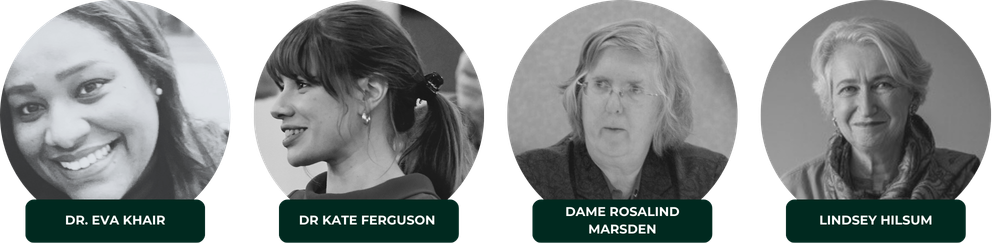
Dr. Eva Khair is a British-Sudanese medical doctor, global health and humanitarian consultant and peace campaigner, with over a decade of experience in Sudan-related crisis response, policy, and advocacy. She is the founder of the #Women4Sudan global solidarity campaign, highlighting the war’s impact, particularly on women and girls, and pushing for meaningful protection of civilians. Dr. Khair also leads the Sudan Transnational Consortium, a network of Sudanese professionals across Sudan, the region, and the diaspora addressing the Sudan conflict and working across the humanitarian-development-peace nexus. She collaborates closely with international and grassroots partners to develop community-driven strategies. Dr Khair is a parliamentary advisor and former health and human rights diplomat to the United Nations.
Dr Kate Ferguson is an internationally recognised foreign policy expert driving a new approach to preventing mass violence. She is the Co-Executive Director and Head of Policy and Research at Protection Approaches, which she co-founded in 2014 to transform how identity-based violence is understood and so transform how it is prevented. She is Chair of Policy at the European Centre for the Responsibility to Protect and Honorary Research Fellow at the University of East Anglia. Dr Ferguson has trained and advised state representatives, parliamentarians, and law enforcement around the world including on developing national and local atrocity prevention. In 2021 Dr Ferguson was appointed as Specialist Adviser to the International Development Committee for the duration of its inquiry Promoting dialogue and preventing atrocities: the UK government approach. She has a PhD on the dynamics of modern mass atrocities from the University of East Anglia and MPhil in Russian and East European Studies from the University of Oxford. Her book, Architectures of Violence: The Command Structures of Modern Mass Atrocities was published in 2020 by Hurst and Oxford University Press.
Dame Rosalind Marsden is an Associate Fellow, Africa Programme at Chatham House. She was the EU Special Representative for Sudan from September 2010 until October 2013. Before joining the EU, she had a long career in the British diplomatic service, including postings as Consul-General in Basra, British Ambassador to Sudan and British Ambassador to Afghanistan. She has also served as Head of the United Nations Department and Director (Asia-Pacific) in the Foreign and Commonwealth Office in London.
Lindsey Hilsum is a broadcaster and writer, with a particular interest in conflict, humanitarian issues and poetry. She is Channel 4 News’ International Editor and the author of three books of non-fiction. Recently she has reported on the war in Sudan, visiting most recently in September 2025, as well as Ukraine, and the return of the Taliban in Afghanistan. She has reported from six continents, covering the major conflicts and refugee movements of the past three decades, including Syria, Iraq, Kosovo and Rwanda, winning many awards. She is the author of Sandstorm; Libya in the Time of Revolution and In Extremis; the Life of War Correspondent Marie Colvin, which won the 2019 James Tait Black Prize for biography. She is a regular contributor to newspapers and literary journals.
Share This Event
Upcoming Events
https://www.theconduit.com/wp-content/uploads/2026/07/IP-split-headshot-images-5.jpg
1080
1920
Programme Team
https://www.theconduit.com/wp-content/uploads/2024/01/Conduit-logo.svg
Programme Team2026-07-10 14:50:572026-07-10 14:50:57Words at War – The Responsibility of Literature https://www.theconduit.com/wp-content/uploads/2026/07/IP-split-headshot-images-4.jpg
1080
1920
Programme Team
https://www.theconduit.com/wp-content/uploads/2024/01/Conduit-logo.svg
Programme Team2026-07-09 12:16:442026-07-09 12:34:12An Evening with John Amaechi
https://www.theconduit.com/wp-content/uploads/2026/07/IP-split-headshot-images-4.jpg
1080
1920
Programme Team
https://www.theconduit.com/wp-content/uploads/2024/01/Conduit-logo.svg
Programme Team2026-07-09 12:16:442026-07-09 12:34:12An Evening with John Amaechi https://www.theconduit.com/wp-content/uploads/2026/07/Tobias-Ellwood-How-to-Prevent-World-War-Three-scaled.jpg
1280
2560
Programme Team
https://www.theconduit.com/wp-content/uploads/2024/01/Conduit-logo.svg
Programme Team2026-07-08 15:30:592026-07-08 15:30:59How to Prevent World War Three
https://www.theconduit.com/wp-content/uploads/2026/07/Tobias-Ellwood-How-to-Prevent-World-War-Three-scaled.jpg
1280
2560
Programme Team
https://www.theconduit.com/wp-content/uploads/2024/01/Conduit-logo.svg
Programme Team2026-07-08 15:30:592026-07-08 15:30:59How to Prevent World War Three https://www.theconduit.com/wp-content/uploads/2026/07/Daniel-Susskind-How-to-Flourish-in-the-Age-of-AI-1-scaled.png
1280
2560
Programme Team
https://www.theconduit.com/wp-content/uploads/2024/01/Conduit-logo.svg
Programme Team2026-07-07 14:14:172026-07-07 15:37:21How to Flourish in the Age of AI
https://www.theconduit.com/wp-content/uploads/2026/07/Daniel-Susskind-How-to-Flourish-in-the-Age-of-AI-1-scaled.png
1280
2560
Programme Team
https://www.theconduit.com/wp-content/uploads/2024/01/Conduit-logo.svg
Programme Team2026-07-07 14:14:172026-07-07 15:37:21How to Flourish in the Age of AI https://www.theconduit.com/wp-content/uploads/2026/06/DOTS-EVENT-IMAGES-7-scaled.png
1280
2560
Programme Team
https://www.theconduit.com/wp-content/uploads/2024/01/Conduit-logo.svg
Programme Team2026-06-29 11:37:192026-06-29 12:20:13Testimony, Truth and Memory in the Wake of Tragedy
https://www.theconduit.com/wp-content/uploads/2026/06/DOTS-EVENT-IMAGES-7-scaled.png
1280
2560
Programme Team
https://www.theconduit.com/wp-content/uploads/2024/01/Conduit-logo.svg
Programme Team2026-06-29 11:37:192026-06-29 12:20:13Testimony, Truth and Memory in the Wake of Tragedy https://www.theconduit.com/wp-content/uploads/2026/06/Palantir-27.07-1-scaled.png
1280
2560
Programme Team
https://www.theconduit.com/wp-content/uploads/2024/01/Conduit-logo.svg
Programme Team2026-06-29 11:23:512026-07-03 12:49:32Palantir and the UK Public Sector
https://www.theconduit.com/wp-content/uploads/2026/06/Palantir-27.07-1-scaled.png
1280
2560
Programme Team
https://www.theconduit.com/wp-content/uploads/2024/01/Conduit-logo.svg
Programme Team2026-06-29 11:23:512026-07-03 12:49:32Palantir and the UK Public Sector https://www.theconduit.com/wp-content/uploads/2026/06/DOTS-EVENT-IMAGES-2-scaled.jpg
1280
2560
Programme Team
https://www.theconduit.com/wp-content/uploads/2024/01/Conduit-logo.svg
Programme Team2026-06-19 13:31:392026-07-09 14:32:14The New Technological Arms Race
https://www.theconduit.com/wp-content/uploads/2026/06/DOTS-EVENT-IMAGES-2-scaled.jpg
1280
2560
Programme Team
https://www.theconduit.com/wp-content/uploads/2024/01/Conduit-logo.svg
Programme Team2026-06-19 13:31:392026-07-09 14:32:14The New Technological Arms Race https://www.theconduit.com/wp-content/uploads/2026/06/Fallow-Time-Workshop-scaled.jpg
1280
2560
Programme Team
https://www.theconduit.com/wp-content/uploads/2024/01/Conduit-logo.svg
Programme Team2026-06-15 10:39:532026-06-15 10:39:53Making the Most of a Career Break
https://www.theconduit.com/wp-content/uploads/2026/06/Fallow-Time-Workshop-scaled.jpg
1280
2560
Programme Team
https://www.theconduit.com/wp-content/uploads/2024/01/Conduit-logo.svg
Programme Team2026-06-15 10:39:532026-06-15 10:39:53Making the Most of a Career Break https://www.theconduit.com/wp-content/uploads/2026/05/Story-Centred-Leadership-1307--scaled.png
1280
2560
Programme Team
https://www.theconduit.com/wp-content/uploads/2024/01/Conduit-logo.svg
Programme Team2026-05-15 09:56:202026-06-22 11:31:41Story-Centred Leadership: Communicating Purpose and Building Connection
https://www.theconduit.com/wp-content/uploads/2026/05/Story-Centred-Leadership-1307--scaled.png
1280
2560
Programme Team
https://www.theconduit.com/wp-content/uploads/2024/01/Conduit-logo.svg
Programme Team2026-05-15 09:56:202026-06-22 11:31:41Story-Centred Leadership: Communicating Purpose and Building Connection

