 https://www.theconduit.com/wp-content/uploads/2026/10/the-world-ahead-with-tom-standage--scaled.png
1280
2560
Programme The Coduit
https://www.theconduit.com/wp-content/uploads/2024/01/Conduit-logo.svg
Programme The Coduit2026-10-30 16:40:292026-11-02 10:01:20The World Ahead 2027: An Evening with Tom Standage

See How The World Can Change: The Solutions Agenda 2025
An evening of hope and action with Paul van Zyl and Simon Mundy, as The Conduit reveals bold ways to tackle the world’s biggest challenges.
What if we could focus on the conversations and actions that truly change the world?
That’s the idea behind The Conduit’s inaugural Solutions Agenda—a bold plan for tackling some of the biggest challenges we face today, from climate resilience to social justice, sustainable cities, and more.
This isn’t just another list of problems. It’s a blueprint for progress, highlighting the areas where we can make the greatest impact by bringing together brilliant minds, fresh ideas, and actionable solutions. And we’re not stopping there. Throughout the year, this agenda will be a key part of our conversations—expect inspiring events, thought-provoking articles, and collaborations that spark real change.
The Conduit’s co-founder, Paul van Zyl, and Simon Mundy, Moral Money Editor at the Financial Times, lead an evening of big ideas, lively discussions, and plenty of inspiration as we launch the 2025 Solutions Agenda. Simon, a seasoned journalist and author of Race for Tomorrow, brings his expertise in exploring the intersection of climate change, sustainability, and economic transformation to this critical conversation.
Together, let’s spark the conversations and actions that will make this year one to remember.
Event Schedule
6:00pm: Pre-event socialising and networking
A cash bar will be available for refreshments.
6:15pm: Event begins
7:30pm: Event ends
Speakers:
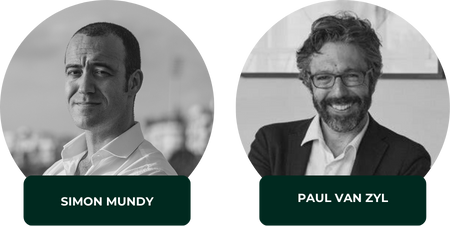
Simon Mundy, the Moral Money Editor at the Financial Times, covers environmental and sustainability issues for the award-winning Moral Money platform and the broader FT. He began his journalism career in Johannesburg, reporting on Southern Africa for the FT, before transitioning to cover London’s financial sector. Simon spent seven years in Asia, leading the FT’s bureaux in Seoul and Mumbai. His diverse reporting experience culminated in a two-year journey across 26 countries on six continents to research his acclaimed book, Race for Tomorrow, which explores the global effort to address climate change.
Paul van Zyl is the co-founder and CEO of The Conduit. Paul is a winner of the prestigious Skoll Award for Social Entrepreneurship and was named a Young Global Leader by the World Economic Forum. He served as the Executive Secretary of South Africa’s post-apartheid Truth and Reconciliation Commission and co-founded the International Centre for Transitional Justice (ICTJ), an international human rights organisation based in New York City.
Share This Event
Upcoming Events
https://www.theconduit.com/wp-content/uploads/2026/10/the-world-ahead-with-tom-standage--scaled.png
1280
2560
Programme The Coduit
https://www.theconduit.com/wp-content/uploads/2024/01/Conduit-logo.svg
Programme The Coduit2026-10-30 16:40:292026-11-02 10:01:20The World Ahead 2027: An Evening with Tom Standage https://www.theconduit.com/wp-content/uploads/2026/10/extinct--scaled.jpg
1280
2560
Programme The Coduit
https://www.theconduit.com/wp-content/uploads/2024/01/Conduit-logo.svg
Programme The Coduit2026-10-27 17:04:412026-10-28 13:07:26Sadiah Qureshi: What is it like to go extinct?
 https://www.theconduit.com/wp-content/uploads/2026/10/Tusk-Awards--scaled.png
1280
2560
Programme The Coduit
https://www.theconduit.com/wp-content/uploads/2024/01/Conduit-logo.svg
Programme The Coduit2026-10-22 11:53:492026-11-02 12:15:26The Land She Would Not Leave
 https://www.theconduit.com/wp-content/uploads/2026/10/Data-Centres-scaled.jpg
1280
2560
Programme The Coduit
https://www.theconduit.com/wp-content/uploads/2024/01/Conduit-logo.svg
Programme The Coduit2026-10-21 14:58:172026-10-30 17:09:52Data Centres: The Costs, Casualties and Opportunities
 https://www.theconduit.com/wp-content/uploads/2026/10/Bridge-Institute-event-1-1-scaled.png
1280
2560
Programme The Coduit
https://www.theconduit.com/wp-content/uploads/2024/01/Conduit-logo.svg
Programme The Coduit2026-10-20 15:17:242026-10-28 13:07:46Governing in Partnership to Solve the Challenges of Our Time
 https://www.theconduit.com/wp-content/uploads/2026/10/All-City-Arts-College-1-scaled.png
1280
2560
Programme The Coduit
https://www.theconduit.com/wp-content/uploads/2024/01/Conduit-logo.svg
Programme The Coduit2026-10-19 08:55:492026-10-19 08:55:49Creativity and the New Vocational Education Agenda
 https://www.theconduit.com/wp-content/uploads/2026/10/Nicky-Perfect-banner-scaled.png
1280
2560
Programme The Coduit
https://www.theconduit.com/wp-content/uploads/2024/01/Conduit-logo.svg
Programme The Coduit2026-10-14 14:55:472026-10-28 14:37:37An Evening with Nicky Perfect
 https://www.theconduit.com/wp-content/uploads/2026/10/Climate-Comm-scaled.png
1280
2560
Programme The Coduit
https://www.theconduit.com/wp-content/uploads/2024/01/Conduit-logo.svg
Programme The Coduit2026-10-14 14:52:522026-11-03 12:42:25Sustainability Communications: From Message to Practice
 https://www.theconduit.com/wp-content/uploads/2026/09/Ruchika-Malholtra--scaled.png
1280
2560
Eddie Howell
https://www.theconduit.com/wp-content/uploads/2024/01/Conduit-logo.svg
Eddie Howell2026-09-17 12:14:092026-09-17 12:15:48Does Ambition Require Competition?


