
Newsroom
Stephen Sackur and Carole Cadwalladr: Hard Truth
October 12, 6:15 pm
Join us for a passionate defence of investigative journalism in the face of authoritarian political power, organised crime and a monopolistic tech elite.

Europe’s eastern and south-eastern borderlands are once again moving to the centre of global politics. As the war in Ukraine continues, we look across the wider region — from political turmoil in Georgia and Armenia’s changing relationship with Moscow to Moldova, Transnistria and the Western Balkans — where unresolved disputes, competing nationalisms and shifting alliances continue to shape Europe’s security.
These are places often treated as Europe’s periphery. Yet history suggests otherwise. The Balkans helped ignite the First World War. Today, the region is again under strain. After years of mass anti-government protests, Serbia remains in political crisis, while the death and glorification of Ratko Mladić has brought the unresolved legacy of the Yugoslav wars back into view, deepening tensions with the EU and reopening painful divisions with Bosnia, itself approaching elections amid continuing political and ethnic tensions.
Relations between Serbia and Kosovo remain another potential flashpoint. Kosovo has been gripped by political deadlock, holding three elections in just 18 months and spending much of the past year without a fully functioning government. The judgment in the war-crimes trial of former president and KLA leader Hashim Thaçi is due on 16 September.
Albania, meanwhile, has seen mass anti-government protests sparked by a multibillion-euro development linked to the Trump family, raising questions about corruption, foreign influence and the country’s political direction as it pursues EU membership.
Much of the Balkans now sits within NATO’s security architecture, while Russia retains significant influence across the region. At the same time, the US and Europe are no longer necessarily aligned in their approach, adding another dimension to the geopolitical push and pull.
Could there be another Gavrilo Princip moment, a local crisis or incident that sets off something much larger?
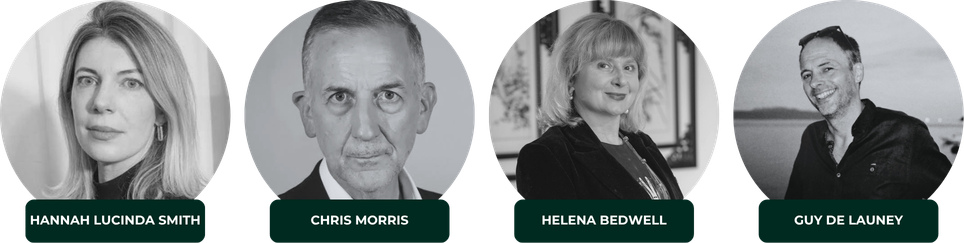
Hannah Lucinda Smith is a journalist and author who has written for The Times, The Economist, Monocle and others. Previously based in Istanbul, she has reported extensively from the Middle East, Balkans and former Soviet Union, and is the author of three books. Her latest, Hinterlands, is an exploration of Europe’s reigniting border disputes.
Chris Morris is Chief Executive of Full Fact and a former senior BBC foreign correspondent. During more than two decades with the BBC, he reported from Europe, Asia, the Middle East and the United States. He later founded and led BBC Reality Check, the broadcaster’s fact-checking service, covering Brexit, UK and US elections and the Covid-19 pandemic. He became Chief Executive of Full Fact in 2023.
Helena Bedwell is an economics staff writer at OC Media and a former Bloomberg News reporter, with 30 years’ experience covering Georgia and the wider Caucasus. Based between the UK and Tbilisi, she writes on politics, economics, business and society, drawing on decades of reporting and an extensive network across the region. She is also a certified translator and interpreter and the author of three books on Georgian food and culture.
Guy De Launey is a journalist specialising in the Western Balkans, where he has been based and reporting since 2012 for BBC News, Monocle, Deutsche Welle, CBC News and The Observer. His reporting covers the region’s politics, societies and economies, including recent political developments in Albania. He also presents The Globalist, The Briefing and Monocle Daily on Monocle Radio.
Share This Event
Join us for a passionate defence of investigative journalism in the face of authoritarian political power, organised crime and a monopolistic tech elite.

Thom Dennis and Dr Nick Earley consider what ecological restoration can teach us about leadership and resilience.

Financial Times columnist Camilla Cavendish investigates a personal choice and a global challenge.


