 https://www.theconduit.com/wp-content/uploads/2026/02/shutterstock_2705988101-scaled.jpg
1707
2560
Charlotte Kilpatrick
https://www.theconduit.com/wp-content/uploads/2024/01/Conduit-logo.svg
Charlotte Kilpatrick2026-02-04 14:44:502026-10-15 15:23:45Chocolate’s sustainability conundrum
Five takeaways from our Venues for IMPACT summit
Stadium design has evolved considerably since the first venues were built in the UK in the first century AD. Roman amphitheatres, with their distinctive tiered seating, were used for far more than gladiatorial contests. They also served as military training grounds, theatres, zoos and spaces for civic and religious assemblies. Even then, these were places with a broader purpose beyond entertaining spectators.
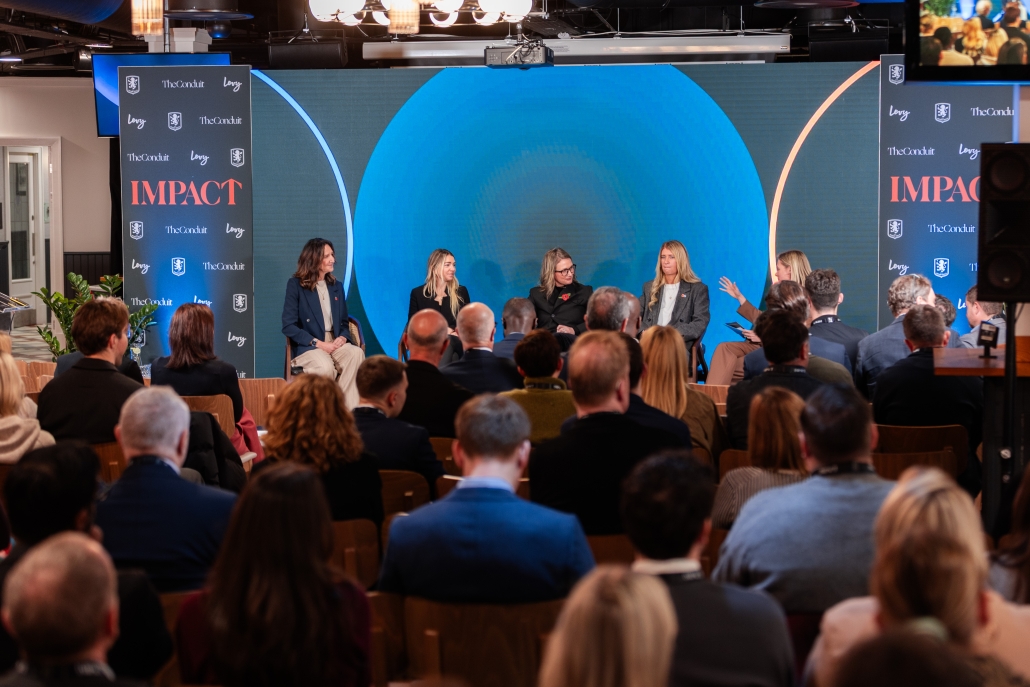
At yesterday’s Venues for IMPACT forum at Villa Park in Birmingham, Conduit co-founder and CEO Paul van Zyl challenged the audience to revisit that idea. Stadiums, he argued, should be thought of as multifunctional facilities serving their communities throughout the year, rather than single-purpose venues that operate one day out of seven (at best). With the right investment and partnerships, they could become generators of green energy, engines of community cohesion and examples of circular economies.
“One of my abiding life principles is that those who know are those who live in them,” he said. That means resisting the temptation to dictate solutions from board rooms and instead working alongside communities to understand what they need. It also means identifying smaller projects that have demonstrated success and investing in taking them to scale,” he said.
Throughout the day, speakers and guests shared practical examples of how the influence and infrastructure of sport could help address local and international challenges. From replacing single-use plastic containers with seaweed-based products to partnering with health services to deliver for underserved communities, the discussions highlighted the potential for stadiums to make a difference.
Here are five key takeaways:
- Women’s sport is ripe for investment
The commercial opportunity in women’s sport is becoming increasingly difficult to ignore. Claire Négiar, Partner in the Financial Services & Sports team at Oliver Wyman, told delegates, “Investing in women’s sports is an exciting opportunity. Investment is growing at three times the pace as the men’s teams.”
Despite that momentum, the market remains significantly smaller than men’s sport, with media rights still undervalued, for example – though there is momentum. The WNBA is widely considered to be the most valuable women’s sports league in the US. Last year media rights were renewed for $200 million, three times their previous value.
Laura Cordingley, CEO of Chelsea Football Club Foundation, observed that more investors are recognising the potential of women’s football in the UK. Since winning the 2022 Euros at Wimbley Stadium, the sport has exploded in popularity. According to Deloitte, Women’s Super League clubs generated £90m in revenue in 2024/25, a 39% increase on the previous season. Commercial revenue reached £41m, while matchday revenue grew to £14m.
- Stadiums could power neighbourhoods- literally
Stadiums are big, and big surfaces make for excellent green energy hubs. With expansive rooftops, car parks and existing infrastructure, stadiums are well placed to generate renewable electricity that can potentially supply the surrounding neighbourhood.
London Stadium, home to West Ham United, provides one example. Its rooftop solar panels generate approximately 850,000 kWh of clean energy annually, enough to power 250 homes. There is considerable opportunity to build on this model. Improvements in solar technology and battery storage mean venues can generate electricity during daylight hours and store it for use when the sun isn’t shining. Germany’s Iduna Park, home of Borussia Dortmund, has 11,132 photovoltaic modules, making it the world’s largest photovoltaic system installed on a stadium. With energy prices rising around the world, renewable clean energy provides one way for stadiums to lower operating costs.
- A pathway to employment
The term “NEET” refers to the nearly one million young people in the UK not in education, employment or training. But as moderator Shafat Khan, director of young changemakers at Ashoka pointed out, the label begins with the idea that there is something missing in the lives of young people. This can be a very demoralising place to start. Marc Leckie Chief Executive, Tottenham Hotspurs Foundation, suggested a better way term by referring to cohort as “LEET”, looking for education, training or employment.
Amia Fishley, a young chef apprentice on a Compass Group scheme, brought the discussion to life with her own experience. “I was on universal credit before the apprenticeship, but I wanted to be working. I was offered a path to apprenticeship, and my month of training was amazing.”
Stadiums have an important role to play here. Their extensive catering, hospitality, maintenance and operations requirements create opportunities to provide practical training and genuine routes into employment.
Apprenticeships offer a particularly valuable alternative for young people who may not see university as the right path, combining paid work with the opportunity to develop skills and experience.
David Ellis, CEO and of Maikai, pointed out that some of the UK’s worst health outcomes are found in places where people lack hope. Too many good jobs are concentrated in city centres, where living costs and rents put them beyond the reach of entry-level salaries. Stadiums can help address this imbalance by creating local opportunities and contributing to the regeneration of their surrounding communities.
Khan also highlighted how much recruitment still depends on personal connections. For young people from working-class backgrounds, a lack of professional networks can be a significant barrier. Apprenticeships offer a way to demonstrate passion and potential rather than relying on who someone already knows.
- A hub for healthier communities
During the final panel of the afternoon panellists explored how stadiums could work more closely with their communities during both moments of celebration and periods of crisis.
Clive Chijioke Nwonka, Associate Professor of Film, Culture and Society at UCL, challenged his fellow panellists and the leaders in the room to consider how venues could serve local residents throughout the year. One example he gave was the high prevalence of prostate cancer in the Black community. Early detection significantly improves the chances of successful treatment, yet access to routine screening can be difficult for men who cannot take time away from work during the week.
“Would it be beyond possibility for Arsenal stadium to be a hub to allow Black men to be tested?” he asked. “We are haemorrhaging research and opportunity by not using these facilities. Around stadiums is where Black men live.”
His suggestion underscored the wider purpose of the forum. Stadiums already have the space, facilities and public profile to host services that might otherwise be difficult for local residents to access. With the right partnerships, they could support preventative healthcare, mental health provision and other community services.
Guy Rippon, Social Impact & Community Director, Aston Villa, pointed to the Club’s work at their training grounds, Brookvale Academy. The £8m indoor and outdoor facility serves as hub for mental health programmes as well as local school activities. It also provides health information including on how to get tested for prostate cancer. Rippon noted that scaling public health programmes would be possible with partnerships with public health bodies that can provide expertise and guidance.
Amy Bird, Head of Fundraising at The National Emergencies Trust added that there is precedent for stadiums to serve communities as emergency health facilities in times of crisis. During COVID, stadiums like Villa Park served as vaccination and testing hubs, as well as make-shift field hospitals. The pandemic forced the world to think outside the box, but the return to normal shouldn’t mean there are no longer significant opportunities to innovate for the community.
- Accessibility must be more than a box-ticking exercise
Making stadiums accessible involves more than installing ramps and providing designated seating. It means considering the entire experience of getting into, around and out of a venue, as well as accessing catering services and other facilities available to able-bodied visitors.
Matt Pierri, founder and CEO of Sociability, told a breakout group looking at inclusivity that for disabled fans, navigating crowds of thousands on matchday can be daunting, even when facilities and access routes are technically in place.
Improving accessibility does not always require major capital investment. Often, relatively small changes to signage, wayfinding and staff training can make venues considerably more welcoming. Achieving this goal means bringing in people with lived experience, not just in consultation, but involving them in the full execution and design.
Other Articles You Might Like
https://www.theconduit.com/wp-content/uploads/2026/02/shutterstock_2705988101-scaled.jpg
1707
2560
Charlotte Kilpatrick
https://www.theconduit.com/wp-content/uploads/2024/01/Conduit-logo.svg
Charlotte Kilpatrick2026-02-04 14:44:502026-10-15 15:23:45Chocolate’s sustainability conundrum https://www.theconduit.com/wp-content/uploads/2026/02/shutterstock_2548256715-scaled.jpg
1709
2560
Charlotte Kilpatrick
https://www.theconduit.com/wp-content/uploads/2024/01/Conduit-logo.svg
Charlotte Kilpatrick2026-02-03 09:01:552026-10-15 15:32:16The Crime That Underpins All Other Crimes
 https://www.theconduit.com/wp-content/uploads/2026/01/shutterstock_2161219925-scaled.jpg
1708
2560
Charlotte Kilpatrick
https://www.theconduit.com/wp-content/uploads/2024/01/Conduit-logo.svg
Charlotte Kilpatrick2026-01-28 12:43:442026-02-11 11:08:54In Sudan’s forgotten war, civilians have built their own lifelines

Ways to change the world every, week
Ways to change the world every, week


